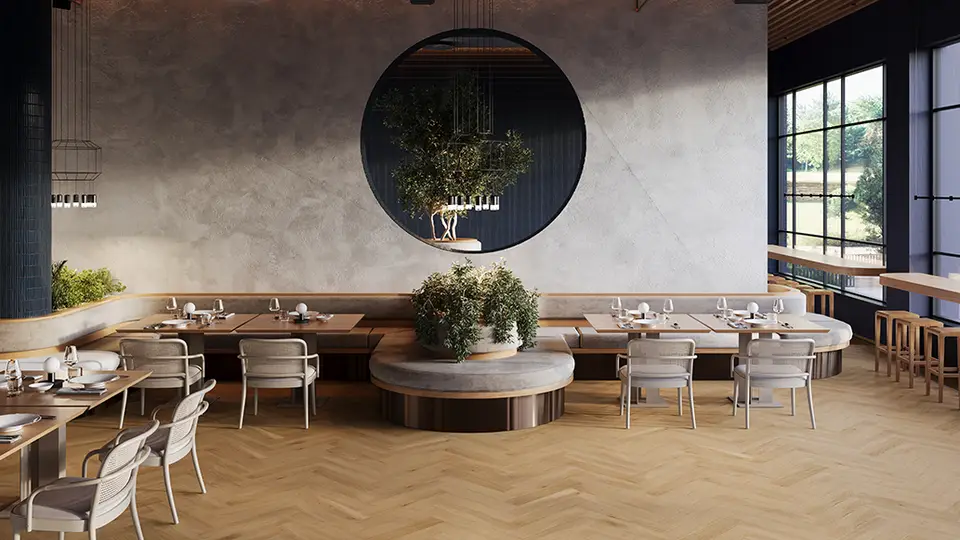
A restaurant is one of the most difficult environments for any flooring material. Several dozen or several hundred people a day, waiters in constant motion, waiter's trolleys, dropped dishes, spilled liquids, grease rising from the kitchen, intensive cleaning of the floor several times a day - and all this seven days a week, for many years. The floor in a catering establishment must be as hard as the examiner's heart and as easy to maintain as a simple matter.
For years, ceramic tiles were the standard in gastronomy. Resistant, easy to wash, durable - but cold, noisy and not very hospitable. Today, more and more owners of restaurants, cafes and food courts are turning to commercial-grade vinyl panels, which combine the durability of ceramics with the warmth and aesthetics of wood or concrete. In this article, we explain why vinyl panels work well in gastronomy and what to pay attention to when choosing them.
Utility class – a starting point from which there is no turning back
In restaurants and catering establishments, there is no room for compromise when it comes to the usability class of the panel. The minimum class for this type of space is 33 - intense commercial traffic. In areas with the highest traffic intensity, such as entrances, bars or passageways, it is worth considering class 34 or products with a 0.55 mm wear layer, which provides additional durability.
Usability class 33 means that the panel is intended for intensive commercial use - hotels, restaurants, shops, communication corridors. Manufacturers test panels of this class for resistance to abrasion, point loads, impacts and intensive chemical cleaning. This is a parameter that should be treated as a minimum in gastronomy, and not as a goal in itself.
A wear layer of 0.55 mm is a standard which, with intensive use and repeated daily washing, ensures a floor lifespan of 10-15 years in commercial spaces. Thinner layers wear out faster and require earlier replacement - which in an active premises means closure, labor costs and downtime.
Glued assembly – the only right option in gastronomy
In a restaurant, vinyl panels should only be installed with glue. This is not a matter of preference - it is a requirement resulting from the conditions of use.
Glued vinyl panels create a monolithic, tight surface without moving joints. In gastronomy, where the floor is repeatedly washed with water and detergent, the glued system eliminates the risk of liquids penetrating under the panels through the gaps at the joints. In the click system, even with well-performed installation, with intensive washing, water penetrates the joints over time and weakens the floor structure.
Glue used in gastronomy must be resistant to moisture and cleaning products used to disinfect floors. It is worth using polyurethane or reactive adhesives that retain flexibility and adhesion even after repeated contact with water and cleaning chemicals. Before choosing a specific adhesive, it is worth confirming its compatibility with the selected collection of panels - VTL provides detailed technical guidelines in this regard.
Hygiene and chemical resistance – sanitary conditions in practice
The restaurant is subject to strict sanitary requirements. The floor must be disinfectable with agents approved for use in food facilities - and these can be aggressive.
VTL vinyl panels have a closed, smooth surface that does not absorb bacteria, grease or dyes. Daily disinfection can be carried out without the risk of damaging the surface - provided that agents with the appropriate pH are used and preparations based on acetone or benzene are avoided, which may dull the wear layer.
Before purchasing, it is worth checking the technical data sheet of the selected collection for chemical resistance and making sure that the manufacturer allows the use of disinfectants used in a given premises. VTL provides this information for each collection.
Particular attention should be paid to the bar area and the kitchen exit - these are the places where grease and moisture most often end up on the floor. Regular cleaning and an appropriate panel surface are crucial for both hygiene and staff safety.
Anti-slip - safety of staff and guests
A waiter slipping with a tray full of dishes is a scenario that a restaurant owner wants to prevent at all costs. Wet floors in restaurants are an everyday occurrence - spilled liquids, washing water, greasy dirt. The slip resistance of the panel must be sufficient to ensure that the surface remains safe even in these conditions.
VTL vinyl panels have a textured surface with an anti-slip texture. For gastronomy, it is recommended to choose panels with anti-slip class R10 according to DIN 51130 - this level is suitable for spaces where the floor is regularly in contact with water and grease. A stone or concrete texture with a clear relief provides better anti-slip properties than smooth wood-like surfaces.
It is also worth ensuring that wet areas are properly marked during washing - standard warning signs combined with a non-slip floor are the minimum required by both common sense and occupational health and safety regulations.
Acoustics – a restaurant that does not deafen
A restaurant with hard floors, bare walls and high ceilings is a recipe for noise. Reverberation, the noise of conversations, the clattering of dishes, chairs being moved across the floor - in such an acoustic environment, guests have to raise their voices to be heard, which generates even more noise. This phenomenon is known as the cocktail party effect, and combating it is one of the real design challenges in gastronomy.
Vinyl panels with a sound-absorbing backing absorb part of the acoustic energy with each step and movement of the chair. This does not eliminate the acoustic problem of the restaurant - this requires acoustic ceilings, soft furniture and appropriate wall materials - but it significantly reduces the sounds of impacts and footsteps, which are one of the main sources of noise in catering spaces.
In restaurants, where we want an intimate, quiet atmosphere, the right floor is one of the elements of acoustic design that is worth taking into account at the investment planning stage.
Aesthetics – the floor as an element of visual identification
The restaurant has its own character and atmosphere that builds guest loyalty and distinguishes the restaurant from the competition. The floor is one of the elements of this atmosphere - one of the first things that a guest notices when entering, and one of the last things that he remembers when leaving.
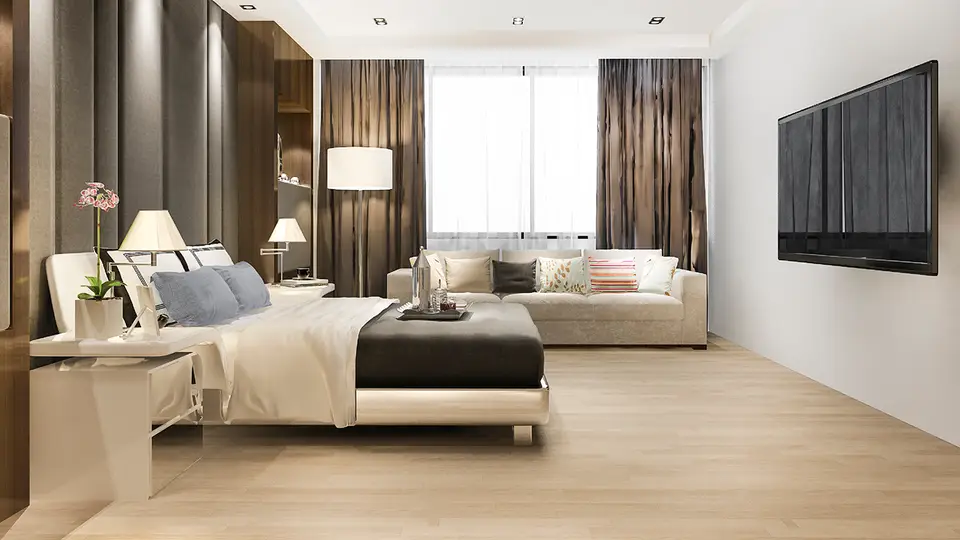
VTL vinyl panels are available in dozens of decors - from realistic wood imitations in warm tones, through cool concrete and stones, to more neutral grays and beiges. Each of these textures can create a different mood: warm wood creates a cozy, bistro-like atmosphere; cold concrete emphasizes the modern, minimalist character; the stone gives the restaurant a loft, industrial atmosphere.
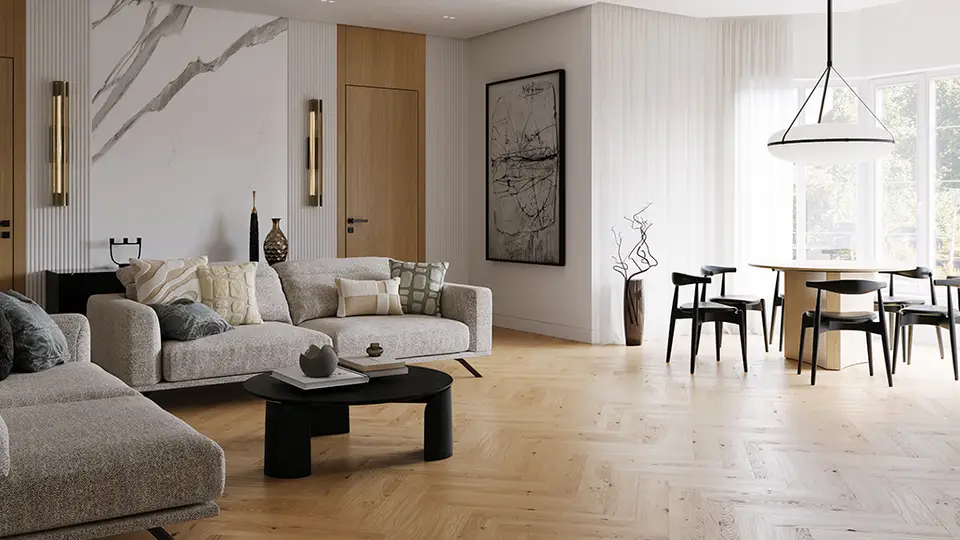
The herringbone pattern in the entrance area or in the central part of the room is an impressive design element that increases the prestige of the premises without having to use expensive parquet floors. Floor zoning - different decors or formats in the bar, dining room and entrance areas - allows you to clearly separate the functions of the space and give each of them a separate character.
Substrate preparation and implementation time
In an active restaurant, floor renovation is always a race against time. Glued installation requires appropriate preparation of the substrate and drying time for the glue - usually 24 hours before being approved for use. It is worth planning to replace the floor during the period when the premises are not open or to spread the work in stages, in zones, if the premises must remain open.
The substrate must meet the requirements of evenness of 2 mm per 2 meters, be dry and stable. In older premises where the previous floor was glued, it is necessary to mechanically remove the old glue or mill the floor - adhesive residues prevent proper adhesion of the new layer and may lead to local detachment of the panels.
Summary
Class 33 vinyl panels with a wear layer of 0.55 mm, mounted with glue, are one of the best flooring solutions for restaurants and catering establishments. They combine durability and chemical resistance required by intensive use with aesthetics that create the atmosphere of the premises, and with acoustic and anti-slip properties that affect the safety and comfort of both guests and staff.
Looking for the perfect floor?
Discover our full range of vinyl flooring and find the ideal solution for your interior.
Want to see our articles more often in Google?
Add VinylTechLab as a preferred source in Google Search so our guides and inspiration appear more often for you.
Add in Google