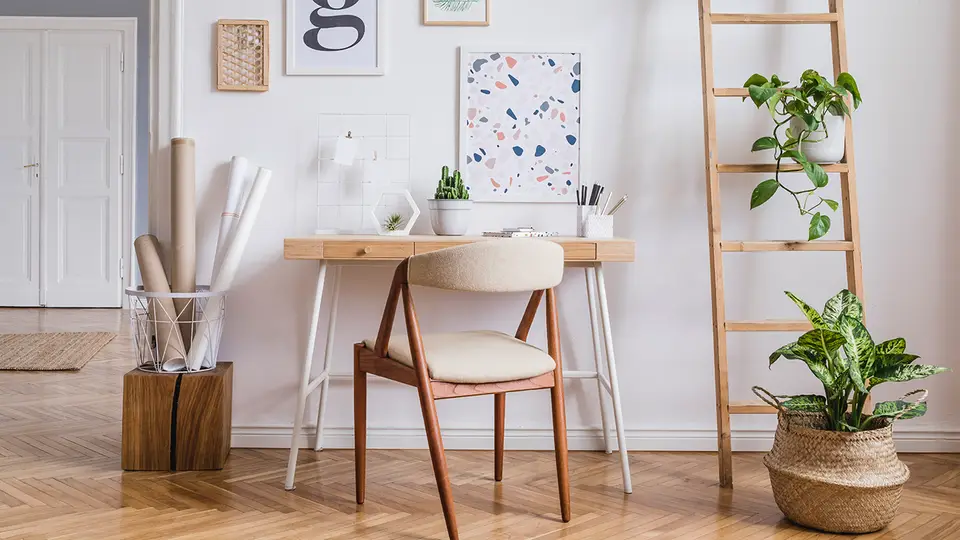
Herringbone is one of the most characteristic floor arrangements, which for years has been associated with elegant interiors of Parisian tenement houses and modern French-style apartments. However, the question arises more and more often - will this design also work in small rooms, such as a hall, a small bedroom or a bathroom? Herringbone panels are a solution that raises both enthusiasm and doubts. In this article, we will take a closer look at this issue and check when a herringbone vinyl panel will actually work in a small space, and when it is better to consider another solution.
What is the herringbone pattern and why is it coming back into favor?
The herringbone arrangement involves arranging rectangular elements at an angle to each other so that they create a characteristic, repeatable pattern resembling coniferous tree twigs. Historically, this pattern was the domain of wooden parquets in elegant living rooms, but today, thanks to modern production technologies, it can also be obtained in the form of vinyl panels. Vinyl panels have long been popular due to their resistance to moisture, ease of installation and a wide range of patterns imitating natural wood. The combination of these advantages with an eye-catching herringbone pattern makes vinyl floors in this pattern an increasingly popular choice both in single-family houses and in small apartments.
The increasing popularity of this solution is also due to the fashion for Scandinavian and French-style interiors, where the herringbone plays the role of a subtle but expressive decorative accent. However, it is worth remembering that the visual effect we will achieve depends largely on the size of the room, the direction of laying and the width of the boards.
French herringbone and classic herringbone - differences in arrangement on a small surface
When talking about herringbone, we often mean two main variants - the classic herringbone and the French herringbone. Classic herringbone is characterized by a simple, repeatable arrangement of elements at an angle of 90 degrees, creating a regular, geometric pattern. French herringbone, on the other hand, is a layout in which the boards meet at an angle, creating a smoother, more dynamic V-shaped pattern.
In the case of small rooms, the choice between these two variants is of real importance. French herringbone, thanks to its fluidity and fewer visible breaks, often gives the impression of a calmer and less overwhelming space than classic herringbone. In turn, a classic pattern, although equally impressive, may introduce more visual noise in a small room, especially if we use contrasting colors of the boards. Therefore, when planning a small interior, it is worth considering whether a subtle French herringbone pattern or a bolder effect of a classic layout will be more appropriate.
Herringbone vinyl panels - technical properties important in small interiors
When choosing herringbone vinyl panels for a small room, it is worth paying attention not only to the aesthetics, but also to the technical parameters of the product. The thickness of the wear layer, the abrasion class and the method of connecting the panels have a direct impact on the durability of the floor, especially in rooms with high traffic, such as a hall.
Herringbone vinyl panels are usually produced in smaller formats than standard rectangular panels, which means a greater number of joints on a given surface. In a small room, this can be both an advantage and a challenge - on the one hand, the finer rhythm of the pattern fits well into a small space, on the other hand, a larger number of joints requires precise assembly to avoid the effect of a chaotic surface. Therefore, when purchasing, it is worth choosing products from reputable manufacturers that guarantee repeatability of dimensions and accuracy of edge milling.
How the herringbone affects the optical enlargement of the room
One of the most frequently repeated myths is the belief that each herringbone pattern optically enlarges the room. In fact, this effect depends on many factors - the direction of arrangement in relation to the light source, the color of the panels and the contrast between the individual elements.
A herringbone placed along the longer wall of a room can visually extend the space, leading the eye deeper into the room. In turn, the use of lighter shades, for example in the colors of natural oak or bleached wood, additionally enhances the enlargement effect. Dark, highly contrasting herringbone panels can visually reduce the space, especially in rooms with little natural light. Therefore, in small rooms, it is recommended to limit the contrast and choose a consistent, light color scheme, which will allow the herringbone pattern itself to be the main decorative element, without additionally burdening the interior with an intense color.
Vinyl floors in the bathroom - will herringbone work well in humid rooms?
The bathroom is a room where choosing the right floor requires special attention due to constant exposure to moisture and water. Vinyl panels for the bathroom have long been appreciated precisely because, unlike wood or laminated panels, they are resistant to water, provided that an appropriate joining system is used and the edges are properly sealed.
The herringbone arrangement in the bathroom is a solution that can look very impressive, especially in small rooms where we want to add character to the interior without the need to use ceramic tiles. However, it is worth choosing vinyl panels for the bathroom with a higher water resistance class and a joining system that minimizes the risk of moisture penetrating between the joints. In the case of a herringbone pattern, the number of joints per square meter is greater than in the case of a classic straight arrangement, so the quality of the click or adhesive system is crucial for the durability of the entire installation.
Selection of color and shade of panels for small interiors
Color is one of the most important elements that determine whether a herringbone pattern in a small room will give the impression of an elegant decoration or an overwhelming pattern. Light and natural shades work best in small interiors - beige, light oak, ash or delicate gray brown. These colors of herringbone vinyl floors look subtle while maintaining the characteristic pattern.
It is also worth paying attention to the surface finish - matte structures with visible wood texture add naturalness to the interior, while higher gloss surfaces can optically enlarge the space by reflecting light. In small rooms, where each element of the decor is more important, the principle of limiting the number of contrasting materials works well - if we decide on a distinctive herringbone pattern, it is worth giving up additional, strong color accents on the walls or furniture.
The most common mistakes when laying herringbone in small rooms
When planning a herringbone floor in a small room, it's easy to make some common mistakes:
- When planning a herringbone floor in a small room, it's easy to make some common mistakes:
When planning a herringbone floor in a small room, it's easy to make some common mistakes. The first is to choose boards that are too wide - narrower elements work much better in a small space and create a finer, more subtle rhythm of the pattern. The second common mistake is improper planning of the arrangement direction in relation to windows and light sources, which may increase the impression of tightness.
Another problem is that the color of the panels does not match the rest of the interior - a floor that is too dark or too contrasting in a small room may dominate the entire arrangement. It is also worth remembering to properly prepare the surface before installation, because the herringbone pattern highlights any unevenness much more than the standard arrangement of straight panels. The last, but equally important, aspect is the precision of the assembly itself - in the case of a herringbone pattern, even a slight deviation in the angle of the first elements affects the entire further course of the pattern on the surface of the room.
Summary - is it worth choosing a herringbone pattern in a small room?
The answer to the question posed in the title of the article is not clear, but in most cases, the herringbone arrangement in a small room may turn out to be a very good choice, provided that you consciously approach the selection of color, board format and laying direction. Panels in this pattern can give a small space character and elegance that cannot be provided by a standard, simple arrangement.
The key to success is to match the appropriate pattern variant - classic or French herringbone - to the specificity of the room, as well as choosing a product with appropriate technical parameters, especially in the case of a bathroom or other rooms exposed to moisture. VTL vinyl panels allow you to implement such a project regardless of your level of experience in renovation work. If you are planning to refresh a small interior and are looking for a solution that will combine aesthetics with functionality, herringbone vinyl panels from VinylTechLab will be the answer to your needs.
Looking for the perfect floor?
Discover our full range of vinyl flooring and find the ideal solution for your interior.
Want to see our articles more often in Google?
Add VinylTechLab as a preferred source in Google Search so our guides and inspiration appear more often for you.
Add in Google