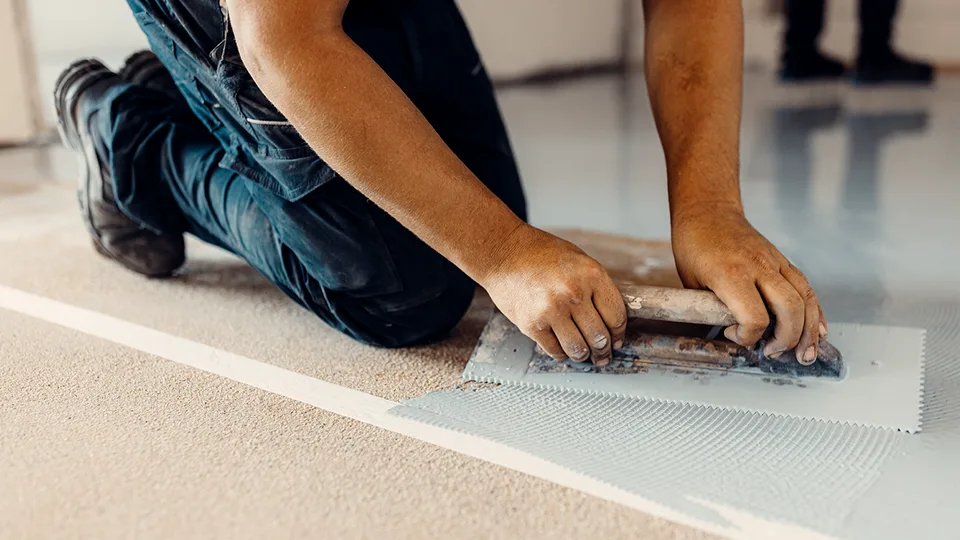
Why is floor leveling important?
One of the most common mistakes when laying vinyl panels is omitting or imprecisely leveling the surface. The effects are inevitable - knocking or creaking panels, visible irregularities on the surface, and in the long run, damage to click locks or detachment of glued panels.
Vinyl panels, especially thinner ones (up to 4 mm), faithfully reproduce the shape of the substrate. Any unevenness, depression or bulge will be visible and felt by the user's foot. Therefore, preparing the substrate is a stage where neither time nor materials should be spared.
In this article, we guide you through the entire process of leveling the floor for vinyl panels - from assessing the condition of the subfloor, through selecting appropriate materials, to checking the readiness before installation.
Assessment of the condition of the existing substrate
Before starting leveling, carefully assess the condition of the substrate. We check several key parameters:
- surface evenness
- bearing capacity and stability of the ground
- humidity level
- presence of old adhesives and coatings
- leveling (is the floor level)
To assess evenness, we use a 2-meter patch applied in different directions on the floor surface. The tolerance for vinyl panels is 2 mm per 2 m - all deviations above this value require correction. Manufacturers such as VTL clearly indicate this requirement in the technical data sheets of their products, and failure to meet it results in loss of warranty.
What materials to use for leveling the floor?
Self-leveling compounds
Self-leveling compounds are the fastest and most convenient way to level a concrete or cement floor. They are poured onto the substrate, where they flow automatically, creating a smooth, horizontal layer. After drying (usually 2-4 hours), they are ready for the next stage of work.
Self-leveling compounds are available in standard variants (to compensate for deviations of 2-10 mm) and thick-layer self-leveling compounds (10-50 mm). For vinyl floors, we recommend materials with low chemical emissions - especially important in residential spaces.
Filling mortars
Putty mortars are used to even out smaller irregularities, scratches and defects. They are applied by hand using a notched trowel and require sanding after drying. This is a labor-intensive solution, but precise and economical for small surfaces requiring correction.
Leveling plywood
On wooden floors (old boards, OSB boards), 6-12 mm thick leveling plywood is used instead of wet masses. The plywood sheets are screwed to the existing floor with screws every 15-20 cm, ensuring even arrangement and minimal gaps between the sheets. This method is used when renovating old buildings with wooden ceilings.
Leveling procedure - step by step
Leveling the floor begins with thoroughly cleaning the surface - removing old adhesives, paints, dust and grease stains. Then, a primer for the leveling compound is applied, which seals the substrate and improves the adhesion of the leveling compound. The primer is applied with a roller or brush and left to dry according to the manufacturer's recommendations - usually 30-60 minutes.
After the ground dries, pouring or applying the leveling compound begins. In the case of self-leveling compounds, the mixture is poured and spread with a comb squeegee, while removing air bubbles with a spike roller. The mass should be poured in strips, starting from the wall opposite the door.
After the mass dries (time specified by the manufacturer, usually several hours a day), the surface is checked again with a patch. If the tolerance of 2 mm per 2 m is maintained, the substrate is ready for installation of vinyl panels. VTL specialists recommend additional humidity measurement just before laying the panels.
Substrate moisture - a key parameter
Even a perfectly level floor may not be suitable for vinyl planks if its humidity is too high. Excess moisture causes pressure on the glued floor, which leads to peeling, blisters and deformation of the surface. For adhesive panels, the permissible humidity of the concrete substrate is a maximum of 2.0% CM (carbide method).
Humidity measurement should be carried out with an electric meter (approximately) or the more accurate carbide method (CM). If excessive humidity is found, it is necessary to use an epoxy or polyurethane barrier that cuts off the migration of water vapor from the substrate. VTL provides detailed guidance on measurement and acceptable humidity values for all of its products.
Summary - do not shorten the preparation stage
Proper leveling of the floor for vinyl planks is a necessary condition for the long life of the surface and maintaining the manufacturer's warranty. Savings at this stage always come back with a vengeance - in the form of floor problems and the need for expensive repairs.
VTL - offers not only the highest quality vinyl panels, but also comprehensive technical support, including guidelines for substrate preparation and a list of recommended leveling materials. Take advantage of our technical advice before starting installation and you can be sure that your floor will serve for decades.
Looking for the perfect floor?
Discover our full range of vinyl flooring and find the ideal solution for your interior.
Want to see our articles more often in Google?
Add VinylTechLab as a preferred source in Google Search so our guides and inspiration appear more often for you.
Add in Google