Vinyl floor - durable by nature, but requiring proper care
Vinyl flooring is famous for its durability and resistance to damage. However, even the best product - like commercial grade VTL vinyl planks - will look and last much longer if proper care is followed. Neglecting daily maintenance or using inappropriate cleaning products can accelerate surface wear, reduce the shine and shorten the life of the floor.
In this article, we discuss all aspects of vinyl floor care - from daily cleaning, through removing difficult dirt, to seasonal maintenance and preventing mechanical damage.
Daily cleaning - simple rules
Daily care of a vinyl floor is very simple and does not require specialized products. The basis is regular sweeping or vacuuming - it allows you to remove sand and abrasive dust, which are the main factor causing surface scratches. A sweeping brush or a vacuum cleaner with a soft cover - this is enough for daily care.
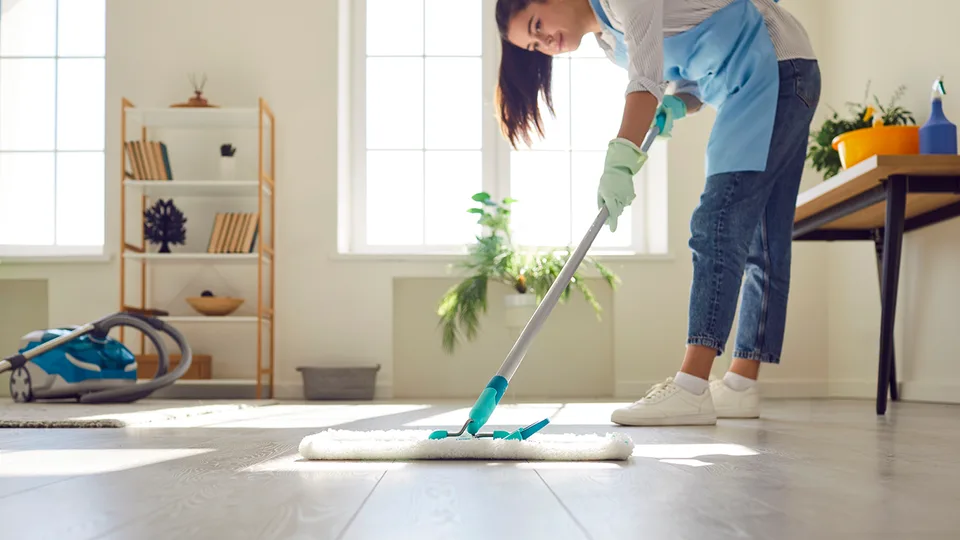
Washing a vinyl floor should be done with a damp mop - not a wet one. Too much water may penetrate the gaps between the panels and cause the glue to weaken or - in click systems - the core to swell. We use water with a cleaning agent intended for vinyl floors. VTL recommends products from renowned manufacturers of cleaning products that are compatible with the UV coating used in VTL panels.
What should you absolutely avoid?
The list of substances and activities harmful to vinyl flooring is surprisingly long. Strictly prohibited items include:
- cleaning products based on acetone, benzene and organic solvents
- aggressive degreasing and bleaching agents
- steam mops (high temperature damages the wear layer)
- polishing agents with wax or oil (create a slippery coating that is difficult to remove)
- abrasive scourers and wire brushes
Particular care should be taken when using disinfectants - many popular alcohol or chlorine preparations may discolor or matt the surface of the panels if used regularly. VTL experts recommend each time you check the compatibility of the cleaning agent with the vinyl surface by testing it on an invisible part of the floor.
Removing difficult dirt
Even with careful daily care, difficult dirt can occur - traces of shoes, adhesives, grease stains or marks from markers. Vinyl flooring deals with them surprisingly well, provided that we do not use too aggressive agents.
Marks from shoes with rubber soles can be removed with an eraser or small amounts of isopropyl alcohol. Greasy stains - dishwashing detergent diluted in water. Adhesives - a specialized glue remover intended for vinyl floors. Traces from markers and crayons - use marker remover or gently with isopropyl alcohol.
After applying any chemical agent, the area should always be rinsed with clean water and wiped dry. Residues of the agent may cause permanent discoloration.
Mechanical protection - furniture and movement
Most mechanical damage to a vinyl floor can be prevented by taking a few simple precautions. Felt pads should be glued under furniture legs - they prevent scratches when moved and reduce point pressures. Chairs on wheels should be equipped with soft wheels (type W, intended for hard floors), not standard hard wheels used on carpets.
At the entrance to rooms with vinyl floors, it is worth placing an internal doormat that will stop sand and gravel brought on the soles of shoes. VTL estimates that up to 70% of scratches on vinyl panels come from sand grains rubbed into the surface by shoe soles.
Seasonal maintenance
Twice a year - in spring and autumn - it is worth carrying out a deeper cleaning of the vinyl floor using specialized preparations for intensive cleaning. These preparations remove accumulated cleaning product residues, grease and mineral deposits, restoring the floor to its original appearance.
After intensive washing, you can optionally apply a protective preparation for vinyl floors - the so-called polymer emulsion - which creates an additional protective layer on the surface of the panels. This preparation facilitates daily cleaning and restores shine. However, it is worth making sure that the preparation is compatible with VTL products - detailed information can be found in the technical data sheet of the selected panel or from our advisors.
The voice of a VTL expert
"The most common mistake made by users of vinyl floors is the use of steam mops - we see their effects regularly in the form of complaints. The high temperature of steam destroys the UV layer and causes permanent bulges of the panels. A vinyl floor does not need steam for cleaning - a damp mop and an appropriate cleaning agent is all it needs to look like new for years," warns the VinylTechLab service and complaints specialist.
Summary
VTL vinyl flooring is designed to last and require minimal maintenance. If you follow the basic rules of care - regular vacuuming, washing with a damp mop, avoiding aggressive agents and mechanical surface protection - the vinyl panel will retain its appearance for many years.
VinylTechLab offers its customers not only the highest quality vinyl panels, but also full after-sales support - including access to recommended care products and technical advice. Do you have questions about the care of your VTL floor? Contact our service - we will be happy to help.
Looking for the perfect floor?
Discover our full range of vinyl flooring and find the ideal solution for your interior.
Want to see our articles more often in Google?
Add VinylTechLab as a preferred source in Google Search so our guides and inspiration appear more often for you.
Add in Google