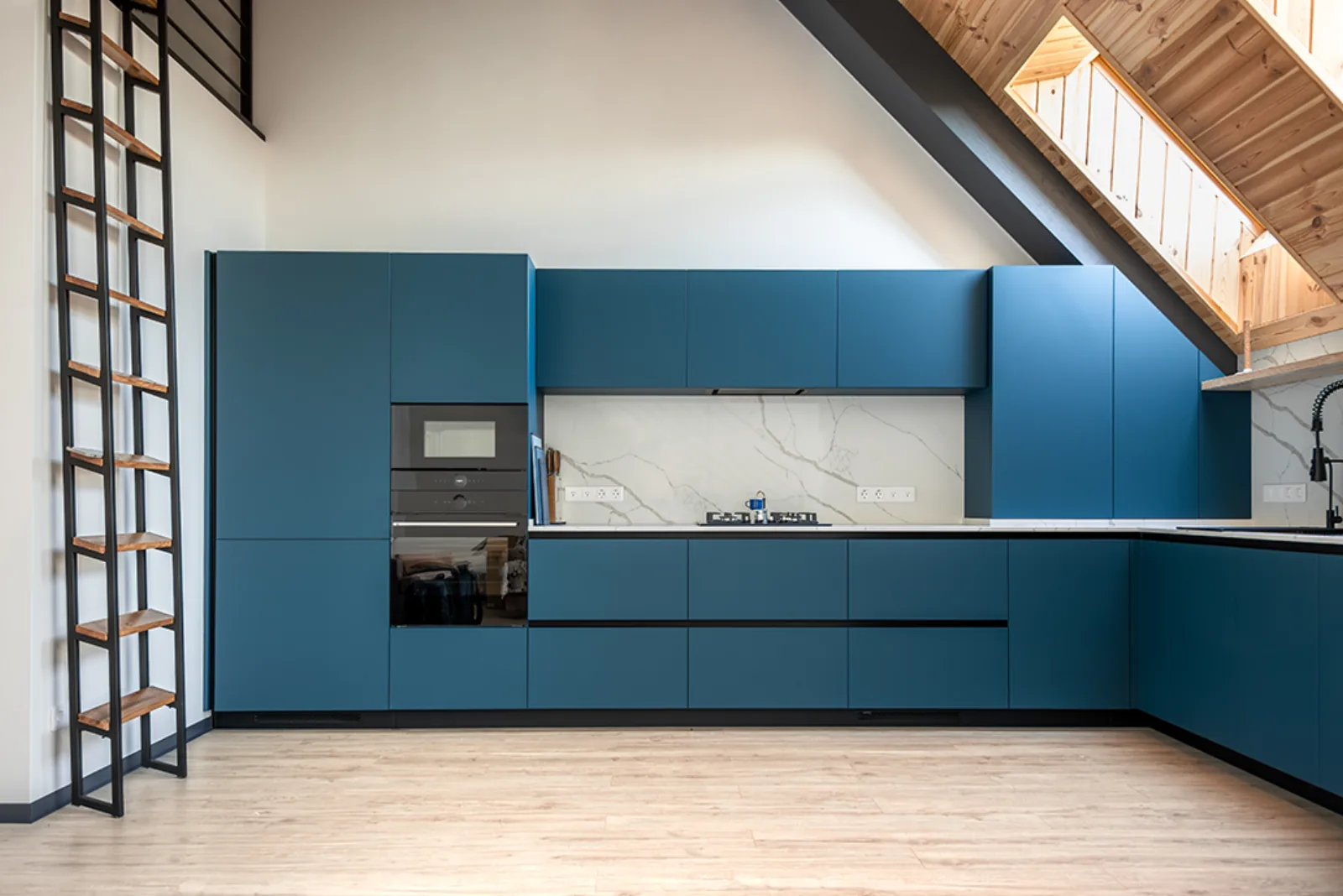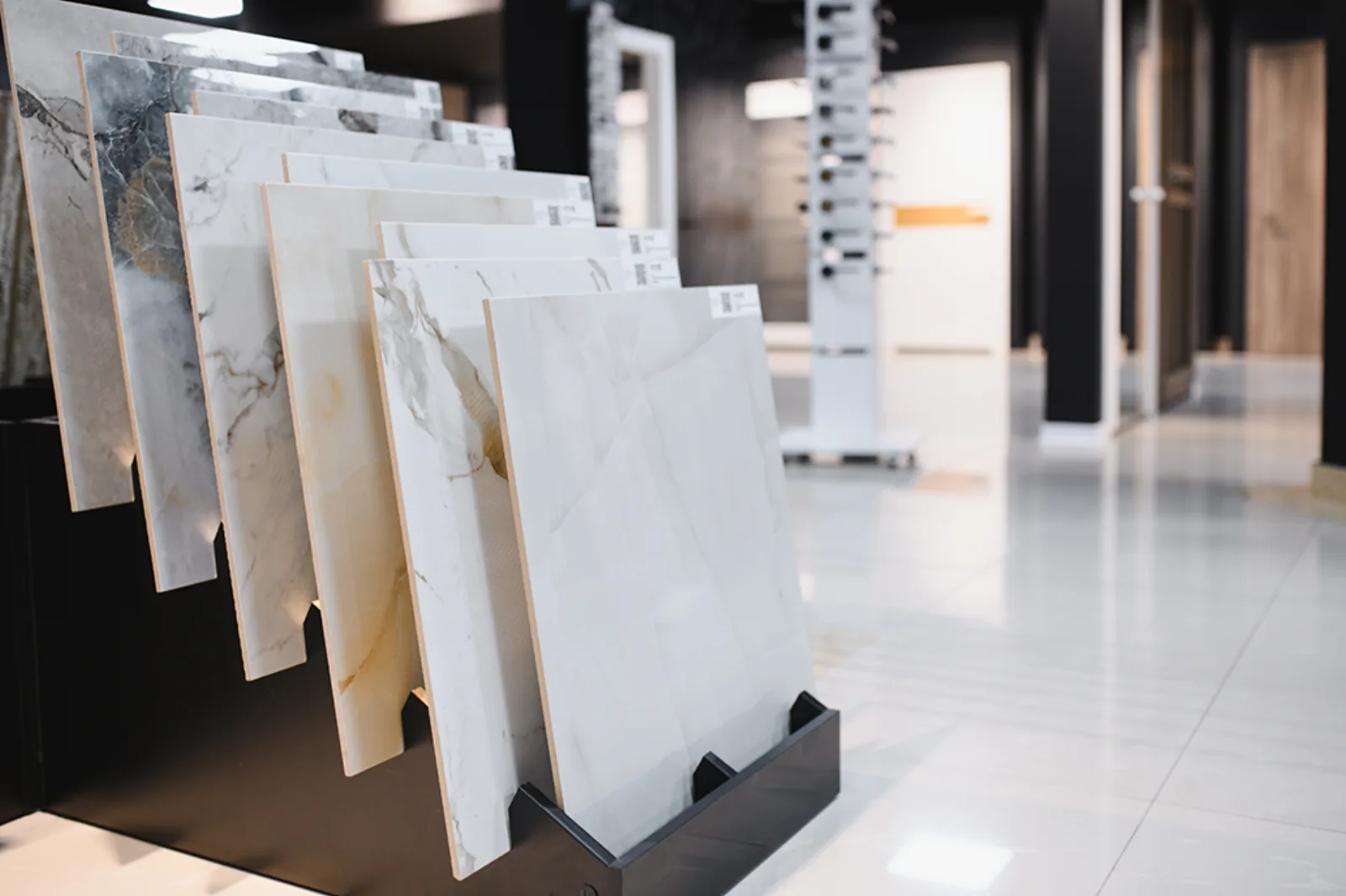
Ceramic tiles and stoneware are materials that have reigned supreme in kitchens and bathrooms for decades. Hard, water-resistant, easy to wash - they seemed to have no alternative in rooms with high humidity. Today, more and more investors and designers are using vinyl panels where, until recently, no one could imagine anything other than tiles. This is not a fashion - it is the result of real advantages that vinyl has over stoneware in specific conditions of use. In this article, we compare both options honestly - point by point.
Water resistance – a draw with reservations
When it comes to water resistance, both materials perform well, but in different ways. Porcelain stoneware is waterproof on the surface, but its weak point is the grout - the gap between the tiles is filled with grout, which absorbs dirt, darkens over time and, if not cleaned thoroughly, may be a place for fungi and mold to grow. White or light-colored grout in the kitchen looks great for the first few months, after which it requires more and more intensive scrubbing to maintain its aesthetic appearance.
VTL vinyl panels with an SPC core are waterproof throughout their entire cross-section - the mineral core does not absorb water. When glued, they create a tight surface without joints, which eliminates the main weakness of stoneware. The only place that requires sealing is the edge near the wall - an expansion joint filled with sanitary silicone.
However, there is a situation in which stoneware has a clear advantage: a shower cabin with a floor drain that requires a precise slope of the floor to the grate. Installing such a drain in ceramic tiles is a technically proven and reliable solution. A vinyl panel next to a floor drain requires precise fitting and additional sealing - it is possible, but more difficult to do.
Comfort of use – a clear advantage of vinyl
Here the difference is most easily felt and most often cited by people who have switched from stoneware to vinyl. Porcelain stoneware is hard and cold. Standing at the sink for a long time on ceramic tiles puts strain on the joints - especially the knees and feet. In winter, stepping onto a cold ceramic floor in the morning is an experience that every owner of a tiled kitchen or bathroom knows well.
Vinyl panels are noticeably warmer to the touch - the temperature difference between vinyl and stoneware is noticeable even without underfloor heating. The flexible structure of the material absorbs steps, which translates into less fatigue when standing at the stove or sink for a long time. Combined with underfloor heating, VTL vinyl panels provide thermal comfort that stoneware cannot compete with.
Acoustics – a clear advantage of vinyl
Ceramic tiles on a hard surface are one of the most acoustically unfriendly flooring materials. Every step, falling plate or moved stool generates a sharp, hard sound that propagates through the ceiling to the neighbors below. In the open spaces of the living room and kitchen, the acoustic effect is particularly bothersome - the sound is reflected from hard surfaces and amplified.
Vinyl panels with IXPE backing effectively dampen impact sounds and reduce reverberation. In the kitchen connected to the living room, vinyl significantly reduces the overall noise level compared to stoneware - which is appreciated by both household members and downstairs neighbors. This is an argument that has real, everyday importance when choosing a floor for an open space.
Installation – time, difficulty and costs
Installing stoneware is a multi-stage process: preparing and leveling the surface, applying the glue, laying the tiles while maintaining even joints, waiting at least 24 hours for the glue to dry, grouting, grout drying and finally cleaning. In the case of large format tiles or patterns that require precise cutting, the time and labor costs increase significantly. The room is out of use for several days.
Installing snap-in vinyl panels can be done on your own in one day, without any specialized tools. Glued installation requires more precision and glue drying time - usually 24 hours - but it is still faster and cleaner than laying stoneware. Labor costs for laying stoneware are usually significantly higher than for vinyl panels, which is of real importance when planning a renovation budget.
Aesthetics – rich offer on both sides
Porcelain stoneware is available in an almost unlimited range of patterns - from imitation wood, through natural stone and marble, to geometric patterns and plain colors. Large stoneware formats, especially 120×60 cm or 80×80 cm slabs, create eye-catching, consistent surfaces with a minimum number of joints.
VTL vinyl panels imitate wood, stone and concrete with very high fidelity. Vinyl panels in tile format that imitate stoneware or marble are also available - for people who want the aesthetics of ceramics with the comfort of vinyl. The aesthetic decision here is a matter of individual preferences - it is worth ordering samples of both materials and assessing them in the target room, with its specific lighting.
Durability and longevity
Porcelain stoneware is an extremely durable material - resistant to scratches, dents, UV radiation and temperature changes. The tile itself, if it does not crack on impact, can serve for several dozen years without losing its appearance. However, the grout requires renovation every few to a dozen or so years, and its replacement is time-consuming.
VTL vinyl panels with a 0.55 mm wear layer ensure durability of 15-25 years with intensive home use. With moderate use and proper care, the service life is longer. A worn-out panel is replaced with a new one - with a snap-on system, this is a simple and inexpensive operation.
Everyday care
Porcelain tiles are easy to wash - cleaning agents, mop, ready. The problem occurs with the grout, which requires regular scrubbing with a brush and the use of specialized agents so that it does not darken and fungi do not develop in it. With white or light grout, maintaining its aesthetic appearance for years requires systematic, tedious work.
Vinyl panels are incomparably easier to care for on a daily basis - a damp mop, neutral detergent, no additional treatments. The lack of grout means the absence of one of the main care problems for ceramics. This is an argument appreciated by anyone who has been scrubbing light grout in the kitchen or bathroom for several years.
When to choose stoneware and when to choose vinyl
Gres is a better choice for floor drains in shower cabins that require a precise floor slope, in saunas, swimming pools and SPA wet areas, and wherever maximum hardness and mechanical resistance are a priority.
Vinyl panels win in the kitchen and dining room, in the bathroom next to the bathtub or shower with a shower tray, in any room where acoustic comfort and warmth underfoot are important, in renovations with a limited budget and time, and above all wherever we want to get rid of the grout problem once and for all.
Summary
Porcelain tiles and vinyl planks have competed for the same spaces in the home for years, but they have different strengths. Gres wins with hardness, durability of the tile itself and the ability to create surfaces with precise drainage. Vinyl wins in terms of comfort of use, acoustics, simplicity of installation and maintenance, and lack of grout problems - which in practice is one of the main reasons why owners of stoneware consider changing the material during the next renovation.
For most kitchens and bathrooms in standard apartments, VTL vinyl panels are today a full-fledged alternative to stoneware - not a compromise, but a conscious choice for convenience and comfort. When deciding on vinyl where, not long ago, you would automatically choose a tile, it is worth ordering a sample and assessing it on the spot - this is often enough to convince you to make a change.
A complete overview of the VTL collections available for kitchen and bathroom applications can be found in the VinylTechLab vinyl flooring offer. You can read more about using vinyl panels in the bathroom in the article about bathroom flooring.
Looking for the perfect floor?
Discover our full range of vinyl flooring and find the ideal solution for your interior.
Want to see our articles more often in Google?
Add VinylTechLab as a preferred source in Google Search so our guides and inspiration appear more often for you.
Add in Google